
When answering the question ‘Which came first, the chicken or the egg?’ it is often said that the chicken is simply an egg’s way of making another egg.
Dyson, G. The Darwin Among the Machines: The evolution of Global Intelligence, Basic Books, New York, 1997.
He also says
“Metabolism and replication, however intricately they may be linked in the biological world as it now exists, are logically separable. It is logically possible to postulate organisms that are composed of pure hardware and capable of metabolism but incapable of replication. It is also possible to postulate organisms that are composed of pure software and capable of replication but incapable of metabolism.”
This observation has a profound implication on how we build intelligent machines using code and micro-chip circuits. The decoupling of pure software that is capable of replication but incapable of metabolism from pure hardware, which is capable of metabolism, but incapable of replication suggests new possibilities to combine them to build a new class of silicon-based society of software components that are autopoietic and meta-cognitive just like a society of cells in a carbon-based biological system.
General Theory of Information and the Burgin-Mikkilineni Thesis shows a path. In this post, we examine the Digital Genome derived from the General Theory of Information and how to build autopoietic and meta-cognitive distributed software societies.
Introduction
The quest to understand life has fascinated humanity for centuries, inspiring philosophers, scientists, and thinkers to explore the essence of existence. This post delves into the current understanding of life, drawing on historical and philosophical contexts, and explores the potential for machines to exhibit life-like properties. By leveraging the digital genome paradigm derived from the General Theory of Information (GTI), we can create an enterprise system that mimics the body, brain, and mind functions of biological systems, enhancing efficiency, adaptability, and scalability. The purpose of this post is fourfold:
- Understand the difference between material structures and biological structures and how properties of “life” differentiate them,
- Study the role of the genome, associative memory, event-driven interaction history of the components of the system, the roles of body, brain, and mind using the general theory of information, and
- Use the digital genome derived from the General Theory of information to build digital genome-based digital “body, brain, and mind” transforming end-to-end business visibility and control.
- Gain insights from the development of autopoietic and meta-cognitive distributed software applications that leverage the digital genome for specification, design, deployment, and operation—integrating both deep learning (sub-symbolic) and algorithmic (symbolic) computing structures.”.
Properties of Life
The exploration of life dates back to ancient civilizations. Greek philosophers like Aristotle pondered the nature of living beings, proposing that life is characterized by growth, reproduction, and the ability to respond to stimuli. In the 17th century, René Descartes introduced the concept of dualism, distinguishing between the mind and the body, and suggesting that life involves both physical and mental processes.
In the 20th century, the discovery of DNA revolutionized our understanding of life. The double helix structure, elucidated by James Watson and Francis Crick, revealed the genetic blueprint that governs the development and functioning of living organisms. This breakthrough laid the foundation for modern biology and genetics, providing insights into the mechanisms of life.
Erwin Schrödinger, in his seminal work “What is Life?” published in 1944, approached the question from a physicist’s viewpoint. Schrödinger proposed that life is governed by the laws of physics and chemistry, yet it exhibits unique properties that distinguish it from non-living matter. He introduced the concept of an “aperiodic crystal,” suggesting that genetic information is stored in a stable yet complex molecular structure. Schrödinger’s ideas influenced key figures in molecular biology, including Watson and Crick, and helped pave the way for the discovery of DNA.
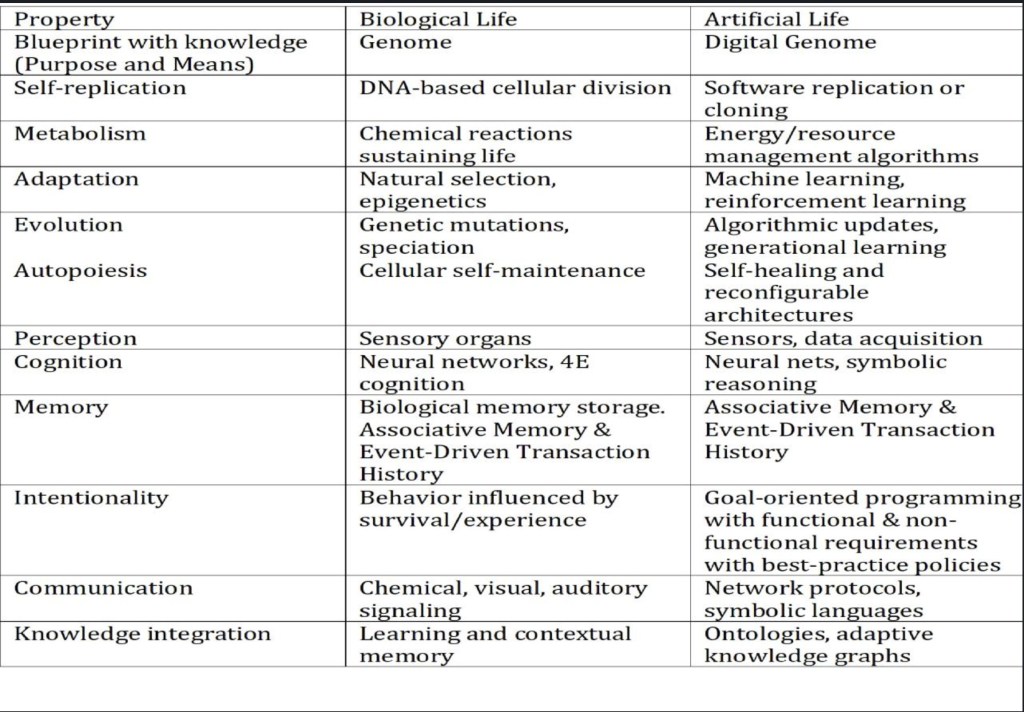
Today, life is generally characterized by self-replication, metabolism, and evolution. It involves processes such as growth, response to stimuli, and reproduction. Modern definitions emphasize the role of communication and network creation among cells, viruses, and RNA networks. These processes are underpinned by the exchange of matter and energy, guided by information encoded in genetic material.
Addy Pross, in his book “What is Life?: How Chemistry Becomes Biology,” describes life as a continuous chemical process governed by principles of stability and complexity. He argues that Darwinian evolution is a biological expression of a deeper chemical principle, where replicating molecules tend to become more complex and acquire the properties of life. Pross’s perspective highlights the dynamic nature of life, driven by chemical interactions that lead to increased complexity and stability.
Energy and Matter: Universe is made up of energy and matter and the transformation rules governed by the laws of nature. Energy, with its boundless potential, is the architect of matter, shaping and modifying its structure while altering the entropy of the system. Information, in parallel, describes the state of a system and its changes, guiding the evolution of matter through the laws of transformation. These laws, whether quantum or classical, are encapsulated in the Schrödinger equation or Hamilton’s canonical equations, dictating the behavior of ideal structures. Ideal structures are theoretical models used in science to describe how systems behave under perfect conditions.
Thermodynamics and Stability – Seeking Equilibrium: The evolution of energy and entropy within a system adheres to the immutable laws of thermodynamics. Systems strive for equilibrium, seeking states of energy minima. When multiple minima exist, transitions occur based on the interactions of the system’s components. These phase transitions, driven by fluctuations in energy and entropy, exemplify the system’s adaptive nature, moving from one energy minimum to another in a phenomenon known as emergence.
Complex Adaptive Systems – The Role of Entropy: Emergence is a hallmark of complex adaptive systems, where fluctuations in interactions lead to changes in energy and entropy, propelling the system from one stable state to another. These transitions are often beyond the control of the system, influenced by external forces that alter the interactions between components and their environment. Entropy, a measure of structural order, evolves as the system adapts to new conditions.
Biological Systems – Mastering Entropy: Biological systems, with their unique properties, manage entropy through energy exchanges within the system and with their environment. GTI posits that information is the bridge between the material world and the mental world of biological systems. These systems have evolved to create and update knowledge, transforming information from the material world into mental structures.
This table summarizes the difference between Complex adaptive systems and biological systems:
| Feature | Complex Adaptive Systems | Biological Systems |
|---|---|---|
| Control | Decentralized | Often decentralized, but with internal regulatory subsystems (e.g., homeostasis) |
| Adaptation | Reactive, via feedback loops | Adaptive through feedback and proactive responses |
| Emergence | Yes | Yes, but often more structured and purposeful |
| Self-Regulation | Limited to system-level feedback | Actively maintain internal balance (e.g., temperature, pH) |
| Self-Reflection | Absent – agents do not possess awareness | Present in higher organisms (e.g., humans) capable of learning, planning, introspection |
The Genome – Blueprint of Life: The genome, a repository of knowledge, provides the instructions for creating, operating, and managing biological processes. It specifies functional and non-functional requirements, best practices for energy and entropy management, and ensures stability and survival. Biological systems inherit this knowledge, using it to build, operate, and self-regulate their structures, maintaining stability while interacting with their environment.
Information and Knowledge – The Essence of Existence: Information has the potential to create or modify knowledge in biological systems. From cradle to grave, we are shaped by the information we receive, converting it into knowledge that guides our actions and interactions. Our genome equips us with the foundational knowledge to manage our existence, while our experiences and perceptions continually update our mental structures.
General Theory of Information: Mark Burgin’s General Theory of Information (GTI) provides a comprehensive framework for understanding information in biological systems. GTI bridges the material world of matter and energy with the mental worlds of biological systems, emphasizing the role of information and knowledge in maintaining life processes. Information, in this context, is not just data but a fundamental component that guides the organization and functioning of living systems.
Genomics and the Blueprint of Life Processes The genome, an organism’s complete set of genetic material, serves as the blueprint for its development, functioning, and adaptation. The genetic code embedded within the genome enables computational models and analytical techniques to decode, interpret, and manipulate genetic information. Advances in genomics have significantly enhanced our ability to understand and engineer genomes, offering deeper insights into the fundamental mechanisms of life. These breakthroughs have paved the way for innovative biotechnologies, including precision medicine, synthetic biology, and genetic engineering, transforming fields such as healthcare, agriculture, and environmental science
Digital Genome in GTI: The digital genome, as described using the General Theory of Information (GTI), is a digital specification of operational knowledge that defines and executes the life processes of distributed software applications. It includes functional requirements, non-functional requirements, and best-practice policies to maintain system behavior. This digital genome specifies the operational processes that design, deploy, operate, and manage applications, ensuring they can self-regulate and adapt to changing conditions. By integrating code and circuits, the digital genome enables machines to perform complex tasks autonomously, mimicking biological processes.
Autopoiesis: Autopoiesis, introduced by Humberto Maturana and Francisco Varela, describes systems capable of self-production and maintenance. Living cells are prime examples of autopoietic systems, continuously regenerating their components to sustain themselves. Autopoiesis emphasizes the self-organizing nature of life, where systems maintain their structure and function through internal processes.
Metacognition: Metacognition involves awareness and understanding of one’s own thought processes. It includes reflecting on how we think and using strategies to improve problem-solving and learning. Metacognition is crucial for self-regulation and cognitive development, enabling organisms to adapt to changing environments and optimize their behavior.
Relationship Between Matter, Energy, Information, and Knowledge: The relationship between matter, energy, information, and knowledge is fundamental to understanding life. Matter and energy are the physical substrates, while information and knowledge guide the organization and functioning of living systems. This interplay is crucial for the self-regulation and evolution of life. Life can be seen as a process of exchanging energy to lower entropy, maintaining stability, and achieving a purpose designed in the genome through the application of knowledge.
Observer and the Observed: The concept of the observer and the observed, explored by philosophers like J. Krishnamurti, emphasizes the role of perception in understanding reality. It suggests that the observer’s perspective shapes their experience of the observed, highlighting the importance of consciousness in defining life. This perspective underscores the subjective nature of life, where the observer’s knowledge and awareness influence their understanding of the world.
Body, Brain, and Mind Analogy:
Body:
- Biological Systems: The body processes and executes the tasks given to it by interacting with its environment. It performs physical actions, responds to stimuli, and maintains homeostasis.
- Digital Genome-Driven Machines: Software performs tasks that interact with its environment. It processes data, executes algorithms, and adapts to changes in input and conditions.
Brain:
- Biological Systems: The brain uses neural networks to receive information and convert it into knowledge through 4E cognition (embodied, embedded, enacted, and extended cognition). It stores information as associative memory and event-driven interaction history.
- Digital Genome-Driven Machines: Intelligent machines use deep learning neural networks to create knowledge from information derived from text, images, audio, and video. This knowledge is stored in the form of optimized parameters of a neural network. Digital genome-based machines also create associative memory and event-driven interaction history.
Mind:
- Biological Systems: The mind uses memory to execute concurrent processes and tasks using the body and brain. It integrates sensory inputs, cognitive processes, and motor actions to achieve complex behaviors.
- Digital Genome-Driven Machines: Digital genome-based systems execute autopoietic (self-producing) and metacognitive (self-reflective) processes concurrently to execute tasks using memory. These systems can self-regulate, adapt, and optimize their performance based on real-time data and historical interactions.
This table summarizes the properties of life.
Implications for Artificial Life
The understanding of life has profound implications for artificial life (ALife), which involves creating systems that exhibit characteristics of living organisms. Artificial life research explores the nature of life by modeling and synthesizing living systems, ranging from software simulations to biochemical systems. These systems can potentially exhibit self-maintenance, growth, reproduction, and adaptation, challenging traditional definitions of life and consciousness.
Infusing Life into Machines
Our knowledge of what constitutes life allows us to infuse life into machines by designing systems that mimic the properties of living organisms. This involves creating machines that can self-replicate, adapt to their environment, and maintain stability through energy exchange. Advances in synthetic biology and robotics have enabled the development of artificial cells and autonomous robots that can perform complex biological functions. To infuse life into machines, we must integrate principles of autopoiesis, metacognition, and information theory. Machines can be designed to self-produce and maintain their components, similar to living cells. Incorporating metacognitive capabilities allows machines to reflect on their processes and optimize their behavior. Information theory provides the framework for encoding and processing the knowledge required for machines to achieve their purpose and maintain stability.
Self-Replication in Machines
Self-replication in machines refers to the ability of a machine to autonomously reproduce itself using raw materials found in its environment. This concept, first proposed by John von Neumann, involves creating machines that can build copies of themselves, much like biological organisms. Self-replicating machines can be used in various applications, such as space exploration, where they could build infrastructure using local resources. Today, we can consider intelligent machine replication as consisting of software replication and the selection of available hardware in the cloud with IaaS and PaaS that is required to execute the application. The decoupling of application replication and self-regulation from the hardware infrastructure and services required for executing the application is a major change from today’s implementation. As Dyson observed, we are using components that are composed of pure software and capable of replication but incapable of metabolism and hardware, which is capable of metabolism, but incapable of replication.
Software Replication and Autopoiesis
Software replication is relatively straightforward compared to hardware replication. Software can be easily copied and distributed across multiple systems. To make software autopoietic, it must be designed to maintain and reproduce its own structure. This involves creating systems that can monitor their own state, repair themselves, and adapt to changes in their environment.
Metacognition in software involves the ability of software systems to reflect on their own processes and make adjustments. This self-awareness allows software to optimize its performance, correct errors, and adapt to new conditions. By integrating metacognitive capabilities, software can become more resilient and intelligent, much like living organisms.
Hardware Replication and Redundancy
Hardware replication is more challenging due to the physical nature of components. However, redundancy can be used to achieve similar results. Redundancy involves having multiple copies of critical components to ensure that the system remains functional even if some components fail. This approach is commonly used in data centers and critical infrastructure to enhance reliability and fault tolerance. The hardware required to execute the software is available in multiple cloud sources on demand with elasticity and ubiquity. The knowledge of how and where to get these resources allows the provisioning of required hardware for the software components designed through the digital genome specification.
Biological Analogy: Redundancy and Material Replacement
In biological systems, redundancy and material replacement are essential for maintaining reliable functions despite the inherent unreliability of individual components. For example, gene redundancy provides a backup system that enhances an organism’s resilience to mutations or environmental changes. Multiple genes with overlapping functions ensure that essential biological processes continue even if one gene is compromised.
Metabolism in biological systems involves the continuous replacement and repair of cellular components. Cells use metabolic processes to convert nutrients into energy and building blocks, which are then used to repair and replace damaged or worn-out parts. This constant renewal ensures that cells remain functional and can adapt to changing conditions.
Digital Genome, Associative Memory, and Event-Driven Interaction History
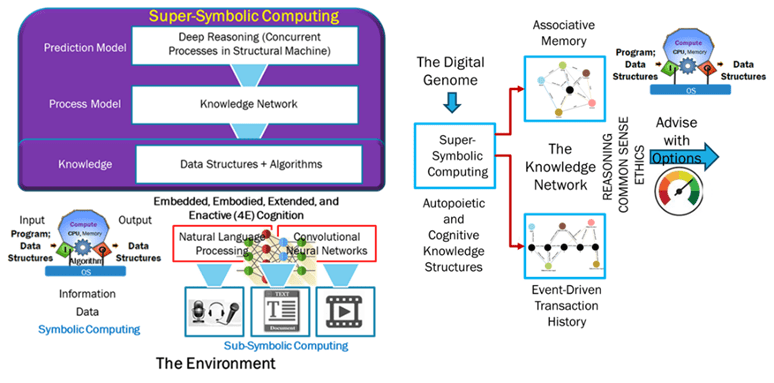
The digital genome, as described using GTI, specifies the operational knowledge required for distributed software applications to self-regulate and adapt. Associative memory in intelligent machines mimics the human brain’s ability to link concepts and retrieve information based on associations. Event-driven interaction history allows machines to dynamically update their state based on real-time events, enhancing their adaptability and responsiveness.
These concepts bring intelligent machines closer to biological systems by enabling them to self-regulate, adapt, and maintain stability through continuous learning and interaction with their environment. By integrating these principles, we can create machines that exhibit life-like properties, enhancing their resilience, adaptability, and intelligence.
Computer and the Computed
Just as the observer and the observed, the integration of the computer and the computed addresses foundational limitations of current machine intelligence implementations using the stored program computing model. Traditional computing models are often static and sequential, where instructions are executed in a predetermined order. This sequential nature limits the flexibility and adaptability of the system. Mind on the other hand requires concurrent processes operating to execute multiple tasks.
Purpose Driving Life
Life is a multifaceted phenomenon defined by a system’s purpose and its ability to achieve that purpose through knowledge of functional and non-functional requirements, best practices, and energy exchange. The interplay of matter, energy, information, and knowledge is central to maintaining stability and lowering entropy. By integrating insights from chemistry, biology, information theory, and philosophy, we gain a deeper understanding of the essence of life and the principles that govern its existence.
The digital genome paradigm bridges the gap between human and machine intelligence by creating a synergy between the body, brain, and mind of computing systems. This approach significantly reduces complexity, improves scalability, and enhances efficiency by embedding self-regulation and metacognition within the system itself. By maintaining a rich history of events and relationships, intelligent machines can make informed decisions, allocate resources effectively, and respond to changes in real-time.
Just as the observer and the observed, the integration of the computer and the computed addresses foundational limitations of current machine intelligence implementations using the stored program computing model. Traditional computing models are often static and sequential, limiting flexibility and adaptability. In contrast, integrating the computer and the computed involves asynchronous communication and dynamic interaction between components, allowing for more resilient and intelligent systems.
By drawing inspiration from biological systems and leveraging the digital genome, associative memory, and event-driven interaction history, we can create machines that exhibit life-like properties. These machines can self-regulate, adapt, and evolve, much like biological organisms, redefining the boundaries of existence and opening new possibilities for artificial life. This comprehensive understanding of life, both biological and artificial, underscores the potential for creating intelligent systems that not only mimic but also enhance the capabilities of living organisms.
Bridging Human and Machine Intelligence: The Promise of the Digital Genome
The digital genome paradigm bridges the gap between human and machine intelligence by creating a synergy between the body, brain, and mind of computing systems:
Body: In biological systems, the body interacts with the external world through senses and the nervous system. Similarly, in digital systems, process execution interacts with the external world using data structures and knowledge. This interaction allows the system to gather information and respond to changes in its environment.
Brain: The brain uses neural networks to provide 4E cognition (embodied, embedded, enacted, and extended cognition). In digital systems, deep learning algorithms optimize neural network parameters to achieve similar cognitive capabilities. This enables the system to process complex information, learn from experiences, and make informed decisions.
Mind: The mind consists of concurrent processes that implement autopoietic and meta-cognitive functions. These processes work off associative memory and event-driven interaction history. This allows the system to reflect on its actions, learn from past interactions, and adapt its behavior to optimize future outcomes.
By integrating these elements, the digital genome paradigm creates a holistic and dynamic system that can self-regulate, adapt, and evolve, much like biological organisms.
Reducing Complexity, Improving Scalability, and Enhancing Efficiency
The digital genome approach significantly reduces complexity by embedding self-regulation and meta-cognition within the system itself. This eliminates the need for external management layers, streamlining operations and reducing the potential for bottlenecks. Systems can autonomously manage their functions, adapt to changes, and optimize their behavior based on past experiences.
Scalability is improved because the digital genome provides a modular and flexible framework that can be easily extended and adapted. New functionalities and components can be integrated without disrupting the existing system, allowing for seamless growth and evolution.
Efficiency is enhanced through the system’s ability to learn from its interactions and optimize its behavior. By maintaining a rich history of events and relationships, the system can make informed decisions, allocate resources effectively, and respond to changes in real-time.
Resiliency is also a key benefit. The self-regulating nature of digital genome-based systems ensures that they can maintain stability and continuity even in the face of disruptions. The system’s ability to adapt and evolve makes it robust and capable of handling unforeseen challenges.
Example Implementations
VoD Service with Associative Memory and Event-Driven Interaction History: A Video-on-Demand (VoD) service can leverage the digital genome approach to enhance user experience and operational efficiency. By using associative memory, the service can remember user preferences, viewing habits, and interactions. Event-driven transaction history allows the system to track user behavior over time, optimizing content recommendations and personalizing the user interface. The system can adapt to changing user preferences, ensuring a dynamic and engaging experience.
Medical-Knowledge-Based Digital Assistant: In the healthcare domain, a digital assistant powered by the digital genome can bridge the knowledge gap between patients and doctors. The assistant uses associative memory to store medical knowledge and patient history, while event-driven transaction history tracks interactions and updates. This enables the assistant to provide accurate and context-aware information, assist in early diagnosis, and support decision-making. The system can learn from each interaction, improving its recommendations and enhancing patient care over time.
Conclusion
The figure represents how the body, brain, and are related in producing human intelligence.

The digital genome approach represents a paradigm shift in computing, moving from static, externally managed systems to dynamic, self-regulating entities. By integrating autopoiesis, meta-cognition, associative memory, and event-driven transaction history, digital genome-based systems can adapt, learn, and optimize their behavior. This approach bridges the gap between human and machine intelligence by creating a synergy between the body, brain, and mind of computing systems. It reduces complexity, improves scalability, enhances efficiency, and ensures high resiliency, making it a promising solution for the challenges of modern computing.
This picture shows the Digital Genome Paradigm
Prototype Demonstrations of Digital Genome Implementations
The Digital Genome concept has been implemented to demonstrate the feasibility, versatility and potential to transform various domain specific use cases:
- Video on Demand (VoD) Service: In the context of VoD systems, the digital genome specifies the operational processes and best practices for designing, deploying, and managing distributed applications. By integrating associative memory and event-driven interaction history, these systems can dynamically adapt to changing conditions and user interactions, ensuring a seamless streaming experience. The digital genome acts as a blueprint, guiding the system’s behavior and interactions, much like a biological genome guides an organism’s development. This approach enables VoD systems to maintain structural stability and optimize content delivery, providing users with a high-quality, personalized viewing experience. Digital Genome and Self-Regulating Distributed Software Applications with Associative Memory and Event-Driven History
- Medical Knowledge-Driven Early Diagnosis Digital Assistant: In the realm of healthcare, the digital genome is implemented in a medical knowledge-based digital assistant to enhance early diagnosis and treatment. The assistant leverages the digital genome to integrate patient’s medical data, and the medical knowledge derived from multiple sources, to offer personalized treatment plans tailored to individual patients. Associative memory helps the system link related medical data, such as symptoms, diagnoses, and treatments, enabling it to recognize patterns and make informed decisions. Event-driven interaction history ensures that the system captures real-time events and updates patient profiles dynamically, providing timely and accurate responses to new information. This intelligent, adaptive approach enhances the efficiency and effectiveness of medical diagnosis and treatment, bridging the knowledge gap between patients and healthcare professionals and ultimately improving patient outcomes. General Theory of Information, Digital Genome, Large Language Models, and Medical Knowledge-Driven Digital Assistant
This Presentation shows a new approach to creating a transparent model-based machine intelligence that captures the associative long-term memory based on event history. The system is designed to use medical knowledge from various sources including the large language models (LLMs) to create and use event history in the early medical disease diagnosis process. The system is designed using the Structural Machines, Cognizing Oracles, and Knowledge Structures suggested by the General Theory of Information.
As the saying goes
“Theory without practice is like a map without a journey, and practice without theory is like building castles on quicksand.”
In this post we attempt to demonstrate that theory and practice when integrated will allow us to:
- Understand material, Biological, and digital structures using the General Theory of Information.
- Explore the roles of genome, memory, and interaction history via General Theory of Information which relates material structures and biological structures through the relationships between energy, matter, information, and knowledge.
- Use digital genome to enhance enterprise systems using Digital Body, Brain and Mind.
This post is sincerely intended as food for thought and invites open discussion to advance our knowledge.
Post Script
Here is the full presentation I made at the first International Online Conference of the Journal Philosophies, addressing Intelligent Inquiry into Intelligence-Contributing to the 2025 IS4SI Summit, 10–14 June 2025.

Mindful Machines and the General Theory of Information: A New Paradigm and Its Applications by Dr. Rao Mikkilineni, Ph D.
 Theoretical and Foundational Problems (TFP) in Information Studies